
Damaged Papers - Chapter 61
Previously…
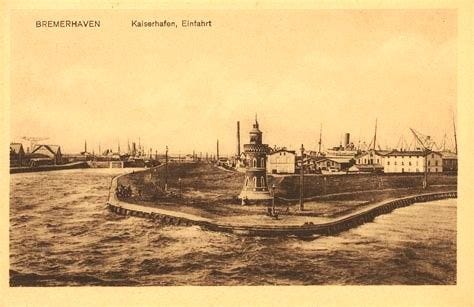
Johann waited on the docks at Bremerhaven, working while watching for the next passenger ship. When the Union finally came in, he risked stepping away to send word home. By the time he returned, the passenger line had tightened and the process was underway. When his papers were examined, Johann was told to stand aside.
*
The clerk folded the papers as Johann watched, tucked them against the back of the ledger beneath his arm, and returned his attention to the line.
Johann shifted his weight and looked back.
A child cried out. His mother drew him close, answering softly, her voice swallowed quickly by the noise of the dock.
Johann stepped aside, and from where he stood, he could still see the edge of his papers.
The family who had been behind him waited now, their attention fixed on the shipping clerk. The mother held the child on her hip; its face pressed into her shoulder. Her foot pinned a bundle just inside the rope.
Eyes brushed Johann, then fell away as they moved past him toward the gangway. Johann kept his gaze on the clerk.
“Papers,” the clerk said, holding out his hand.
Two young men alike enough to be brothers stepped forward. Paper changed hands. The clerk wrote, tore a corner free, and motioned the next forward.
Johann watched in silence.
Another family stepped forward. More papers changed hands. The gangway answered with the hollow sound of climbing feet.
A gull screeched overhead, sharp enough to draw Johann’s eyes up.
A fine drizzle began to fall, cool on his face. People passed close enough that he felt the air shift. The smell of damp wool and linen came again and again.
Johann stopped following faces. Only the rhythm remained.
Step forward. Papers passed. Questions asked. Writing followed.
An older official stepped in beside the clerk, his coat cleaner than the others, his cap set back rather than pulled down.
The clerk glanced up once. A word passed between them, too low for Johann to hear.
The ledger shifted as the clerk freed Johann’s papers from beneath his arm and handed them over.
The official took them without comment and stepped a few paces aside, lifting them toward the light. He ran a thumb along the softened edge, flipping them over.
The official came back toward Johann, papers still in hand. Johann had to lift his gaze to meet the taller man’s eyes.
“From where?”
“Remscheid,” Johann said.
The man studied Johann’s face.
“Ja?”
“Remscheid,” Johann repeated a little stronger.
The official looked down at the papers.
“Occupation?”
“Laborer.”
Johann waited, twisting the end of his mustache.
“Age?”
“Nineteen.”
The official’s eyes narrowed. “How did your papers come to be wet?”
Johann glanced down, then back up. “I fell into the river. The papers were in my pocket.”
The official looked at him a moment longer.
“You fell into the river...” He ran his thumb once more along the softened edge and did not look up.
The words came before Johann could stop them.
“I was pushed.”
The official turned the papers once more, then handed them back. His mouth tightened briefly before he motioned Johann toward the gangway.
The rope, rasping where many hands had gripped it, dipped to let him through. Johann stepped onto the gangway behind a man already climbing, a pipe clenched between his teeth.
The planks gave under his step. He adjusted without thinking and went on, the boards narrow and worn smooth, grit ground into the grain.
The ship’s hull rose close ahead of him, dark and streaked along its seams, shutting out the sky as he climbed. Water struck the iron below with a rhythmic, hollow sound, the low note carried upward through the planks.
He followed the man ahead, close enough to see the worn seam at the shoulder of his coat. A child brushed against his leg as the line slowed.
As Johann reached the ship, he touched the hull, the side tacky with tar beneath his fingers. The drizzle continued to fall.
A crewman stood at the gangway port, guiding them through as Johann stepped over the threshold and inside. The light dimmed. The low ceiling, beams crossing overhead, pressed closer than the sheds along the quay where he slept. Iron walls narrowed the passage. Footsteps inside sounded muted.
A seaman spoke briefly, words Johann did not catch, and pointed him on. Johann followed the others down the steep stairs, one hand on the rail, watching the feet ahead of him. A man lifted his daughter as she began to fuss, settling her against his shoulder as they went.
With each step, the air grew damp and warm, carrying the smell of bodies shut in together, old wood, and the faint sourness of bilge.
The light thinned further. Lanterns glowed unevenly, swinging slightly with the ship’s movement. Shadows slid along the walls, crossing the beams overhead.
Below, steerage widened only enough to admit them. Rows of bunks, three high, filled it from floor to beam, leaving little room to stand. People were settling in—papers tucked away, coats folded, a place claimed by sitting.
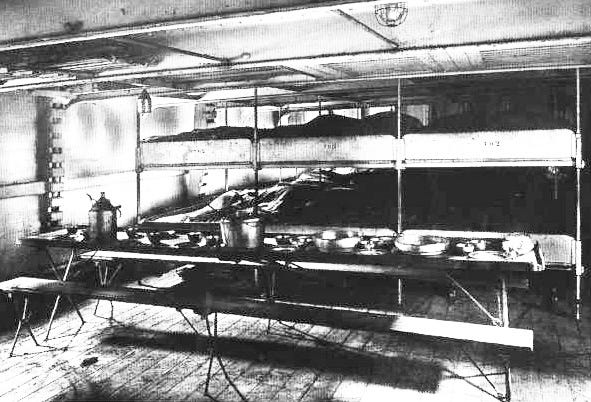
A crewman in a hurry pointed as he turned away. “There.”
Johann stepped clear of the stairs and sat on the edge of the lowest bunk where directed. The wood was hard beneath him.
The ship lifted slightly, a slow, restrained motion that carried through the boards and into him.
Johann sat a moment longer, then reached into his pocket and broke off a piece of bread. He ate slowly, staring at the floor, the taste dry and familiar. Brushing the crumbs from his fingers, he leaned back against the wall.
The bunk above him was nearer than expected, boards rough and pale, the space between measured in inches rather than comfort.
People continued to come down the stairs in ones and twos, then in small clusters. Each arrival brought a brief stir, shuffling feet, a bag set down, a murmured exchange.
The bunks filled unevenly. A tired-looking woman sat, then lay back. Another stood waiting until there was room.
Johann folded his hands once, then let them rest on his knees as others went past.
Time loosened its hold. The press of arrivals slowed. The sounds above faded, becoming water against the hull, an occasional voice carried down, rope creaking and pulling under strain against the river.
A crewman moved through the compartment without stopping. No orders came. No urgency followed.
Johann settled more fully against the wall, the wood cool through his coat.
He listened as breath and movement around him eased.
When nothing else changed, he stopped waiting for the ship to move.
After a time, Johann stood and followed the movement of passengers along the length of the compartment. The man ahead of him in line glanced back once.
“That way,” he said, tipping his chin. “You’ll breathe better once she’s moving.”
Johann nodded and waited his turn. He sat on the dark, smooth, worn boards, fixing his eyes on the wall across from him. The damp air lay close and heavy.
When he finished, he returned without hurry and took his place again on the bunk.
The man beside him shifted to make room.
“You just get on?”
“Ja.”
“Where to?” he asked, propping himself on an elbow.
“Minnesota.”
The man nodded. “Southampton first, anyway.”
He lay back again.
The ship kept its slow, gentle motion.
Johann closed his eyes. Nearby, someone snored.
~
Johann woke to the sound of footsteps moving above him, more frequent than before. Voices passed overhead, breaking off as they went. Something metal rang out, loud enough to carry through the ship.
A low vibration gathered beneath him, traveling through iron and timber together.
Johann lay still, listening. When the pull of the ship came, his breath went with it.
The man beside him shifted and glanced toward the stairs.
“Feels like we’re moving.”
Johann nodded.
“Ja.”
The long journey to Minnesota should be an interesting one. Johann is moving ahead in location and in life. Great post, Colleen.
This is written in such a way that it’s immediately captivating, riveting. I yearn to read more, but from the beginning. Thank you for sharing your story.