
The Union - Chapter 60

Previously:
Johann arrived in Bremerhaven by river steamer in the afternoon, pressed among emigrants. Carrying nothing of his own, he found work on the quay for food, taking in his first measure of the harbor’s ways before sleeping in the sheds beyond the docks.
*
Several days had passed in a rhythm of lifting and waiting. Work on the dock left its mark on Johann, the give of wet planks underfoot, the rasp of rope against his palms, salt stinging into old cracks. Hunger came early and stayed.
He stood near the water when the man they called Behnke straightened, weight easy on his heels, tar darkening the cuffs of his trousers. He shaded his eyes. Others followed his gaze.
“She’ll come in on this water.”
“Pilot’s already out,” the man beside Behnke answered, chewing the words.
A crate settled back against the planks with a dull knock.
“If the river holds,” Köhler said, his cap flattened by years of weather.
Johann shifted his grip on the rope. “Will there be work once she’s in?”
Behnke didn’t lower his hand.
“There’s always work,” he said. “Question is whether you’re looking to keep at it—or get aboard.”
Johann didn’t answer at once. He tightened the rope where it crossed his palm and looked back toward the water.
Behnke followed his gaze and gave a short nod.
“Then keep your bread on you,” he said. “Once she’s in, hunger makes men careless—and others bold.”
Köhler adjusted his cap. “And they don’t call twice. Step out, you lose your place.”
Johann did not look away from the water.
The harbor mouth darkened.
A shout went up farther down the dock, just sharp enough to carry. Another answered it. A basket was set down and left. The steady work along the dock came apart as men held where they stood.
Johann adjusted his footing as the quay shifted beneath him, the water working against the pilings. The far end of the harbor blurred in the haze, then cleared as the dark mass moved in with the tide.
The shape continued to fill the waterway, its outline sharpening as it came on. Men bent again to their work, though more slowly now, glances breaking off and returning to crates and rope.
“Move that,” Köhler said, nudging Johann with his elbow.
Johann took up the load and shifted it down the line. He kept his eyes on the work in front of him, the approaching hull pulling at his attention.
“Steamer,” a fisherman called from a rowboat riding the edge of the channel.
It took effort not to look up. Each sound from the water tugged at him—the deeper note of the ship, the way smaller boats shifted aside. He had risked too much to be seen idle now. A crate passed through his hands and was gone; another followed close behind. Only then did he allow himself a quick glance before the work claimed him again.
The elder Köhler squinted toward the water.
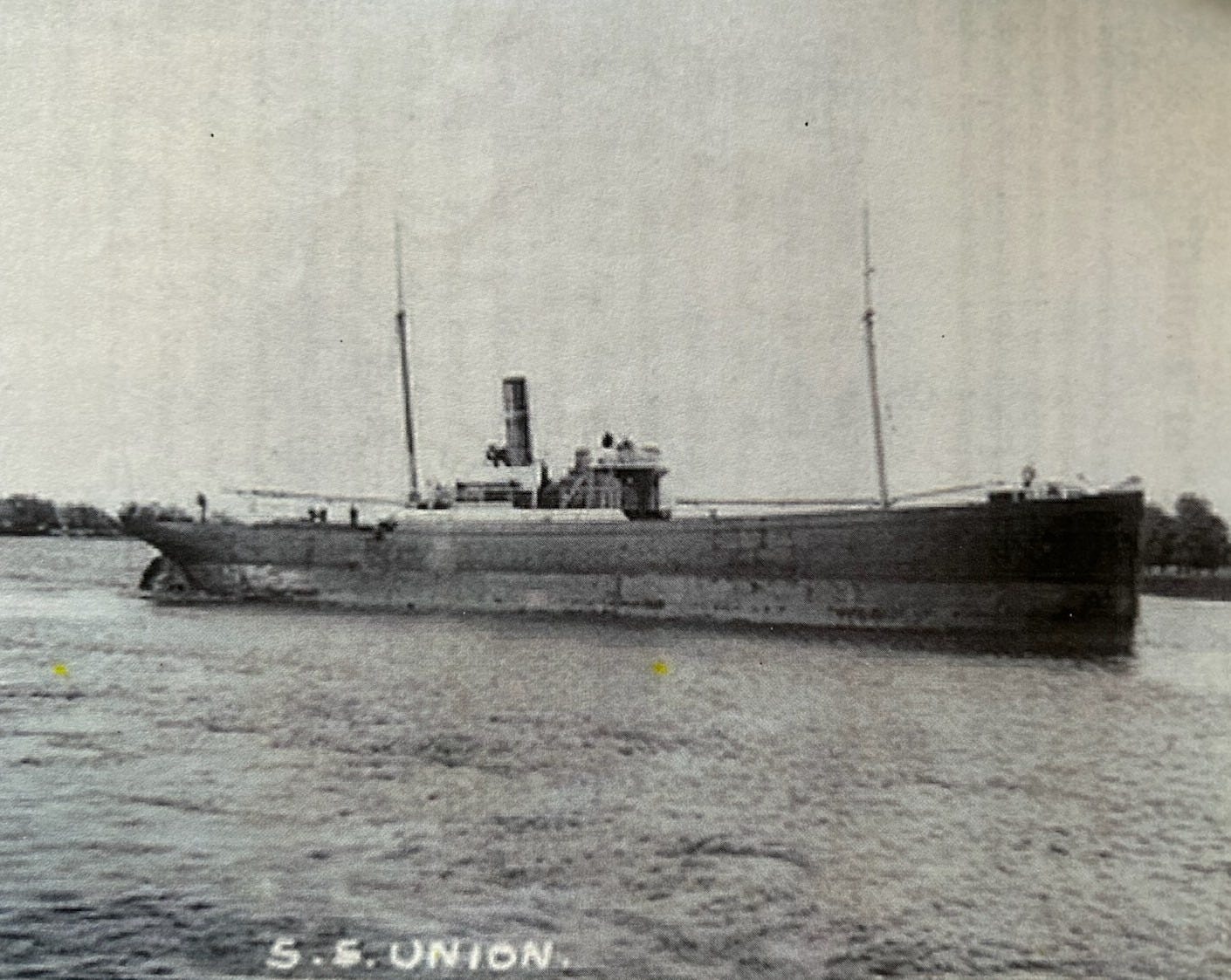
“Union,” he said. “That’s her.”
Johann held the name in his mind as the crate left his hands. He waited for another to take its place before speaking.
“If a man needed to send word,” he said, not looking over, “where would he go?”
Köhler looked up. “Post office is back toward the square.”
“Saw a fellow step off once,” Behnke said. “Came back too late.”
“They won’t wait for letters,” Köhler said.
Johann hesitated before picking up his crate. “How soon after she’s in do they start taking men?”
“Once she’s tied up and cleared,” Köhler said, wiping his brow. “Soon as they’re ready.”
“Soon enough you don’t want to be gone,” Behnke added.
A rope came whistling in from the water. Men moved to catch it. The hull came in with a low, jolting thud, and the dock answered with a groan. Lines slapped the planks; men surged to meet it.
With the ship fast alongside, the dock shifted into another rhythm. Cargo came off. Coal went aboard.
Johann watched passengers step down the gangway and move away, their bundles already claimed.
The name Union sat in his mind like a weight he could no longer carry. He set the crate down where he stood and stepped out of line.
He had gone only a few steps when a voice called after him.
“You there—”
Johann let it land between his shoulders and kept going as a man stepped forward to fill the space he’d left. The work went on.
Coal dust hung thick in the air now, blackening hands and collars as it went aboard. Men moved faster, heads down. A shipping clerk took a place near the gangway; a ledger braced against his forearm.
“Won’t be long,” a voice said.
No one answered.
A passenger near the gangway set his bundle down at his feet. Others drifted closer behind him.
The clerk looked up and began to write.
~
“Union,” Johann said, leaning closer as the post office clerk dipped his pen. “Bound for New York.”
Johann stayed where he was, hands tight on the counter’s edge, watching the pen scratch and lift, scratch again. He waited for the clerk to look up before speaking.
“Write this,” he said, keeping his voice low. “Tell her I have reached Bremerhaven.”
The pen paused. A man stepped in beside him, breathing heavily, the sound close in Johann’s ear, fingers tapping on the counter.
Johann glanced sideways and turned back again. “Tell her the ship is called Union. That I will be aboard her, God willing.”
Ink darkened the nib as the clerk dipped it again.
“Ja,” the clerk said, already writing, unhurried. When he finished the line, he looked up.
“And where is it to go?”
Johann leaned closer. “Elisabeth Bauer,” he said. “Veronika, Kreis Flatow. Province of Prussia.”
He listened for the scratch of the pen to begin again before adding, “Tell her I will send word when I land.”
“Ja.”
The man beside Johann huffed softly as he shifted his weight, the counter giving a faint creak beneath his hands.
Johann slid the coins onto the counter. “That’s enough.”
The clerk took them without looking up.
Johann turned, already moving before the clerk’s pen came to rest. He caught the door on his shoulder as it swung inward, the cold rushing in off the harbor, and brushed past a man coming in.
“Sorry,” he muttered without slowing, taking the steps two at a time.
Outside, the street ran downhill toward the water. Wagons clogged the way, iron rims ringing against stone. Johann cut between them, head down, barely clearing the wheels. A woman shouted. He was already past her, breaking into a run.
The quay came into view in a sudden narrowing. Lines had been hauled tight, rope drawn across the open space and cinched to iron rings. Men, women, and children stood along it, bodies spaced where the rope allowed, leaving no room to drift.
Bundles and small trunks lay at their feet, their faces turned the same way toward the ship’s dark side rising close above the pilings.
Coal dust thickened the air, bitter on the tongue. Water struck the hull with a deeper beat. Voices rose with purpose.
Near the gangway, the shipping clerk stood with the ledger open, already marked. A name was spoken. He wrote again.
Johann slowed long enough to catch his breath, his chest burning as he scanned the line of passengers.
He saw Köhler first, the flattened cap pulled low where he stood among the men working. Behnke was a few paces closer to the gangway now, shoulders squared. Behnke did not look back.
Johann’s eyes went to the rope, then along it, searching for its end. He stepped in where the space allowed, tipping his head back to see the ship’s side rising above the line, dark and close enough to touch.
Another traveler pressed close behind him.
Johann felt the weight of his coat pocket; the bread was still there. He craned his neck, trying to see ahead, but shoulders and hats crowded the view.
A name carried back from the gangway.
No one moved.
A few places ahead, an empty-handed man ducked under the rope and tried to shoulder into a gap between bodies.
“Nein!” a voice snapped.
The rope jerked tight.
The line moved at last — two paces, then held again.
A woman, turned away at the front, came with a child tucked close at her side, papers folded in her hand. She did not look up as she passed.
A breath went through those waiting. No one spoke.
The people ahead of Johann stepped forward, enough to steal a foot of ground. He followed, moving when they did until it held again.
A name was spoken.
No one moved.
Just ahead of him, the clerk repeated a name and wrote it down. Johann tugged at his mustache.
When the line settled again, the shipping clerk stood only a few paces ahead, the ledger open.
The family in front of him shifted toward the gangway, and Johann found himself in front.
The clerk held out his hand. “Papers.”
Johann drew them from his coat.
The clerk unfolded the papers, turning them once, glanced to the ledger, then back again.
He pointed away from the line.
“Stand there.”
Johann's progress is gradual but gradual progress is still progress. Nice pacing.